The Asia Vulture Crisis: The Cause
Background
Tens of millions of vultures used to be present across India, Pakistan and Nepal. Since the early 1990’s three vulture species have undergone catastrophic declines. Populations have decreased by at least 97% across the subcontinent and continue to decline at around 40% a year, placing these three critically endangered species on the brink of extinction.
Extensive research has identified the cause of the declines to be Diclofenac, an anti-inflammatory drug routinely administered to livestock in Asia. Vultures are exposed to the drug when they consume carcasses of animals that were treated with Diclofenac a few days before death.
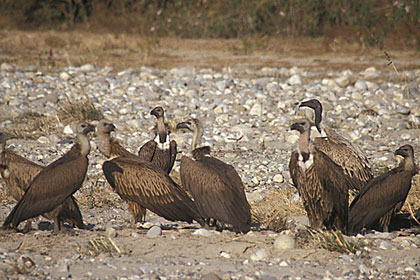 |
| Asian White Backed and Slender Billed Vultures |
Diclofenac is highly toxic to vultures, causing them to die of kidney failure.
The potential loss of these vulture species has profound ecological and social consequences in Asia. Vultures play a vital ecosystem service by rapidly disposing of carcasses that would otherwise pose a risk of disease. With the decline of vultures there has been a dramatic increase in feral dog numbers, which pose a real risk to human health and safety.
Save our Soarers along with our partners, RSPB, Vulture Rescue, Bird Conservation Nepal and Himalayan Frontiers aim to halt the vulture declines and to minimise the ecological and social costs of the decline in the three species. Through an active program of conservation research, captive breeding and advocacy, we are working to ensure the survival of vultures in Asia.
Threatened Vultures
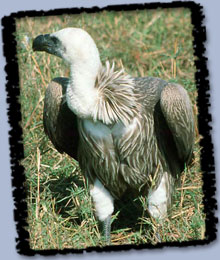
Three vulture species in Asia belonging to the Gyps genus are now critically endangered. These species are the Oriental White-backed Vulture G. bengalensis, Long-billed Vulture G. indicus and the Slender-billed Vulture G. tenuirostris.
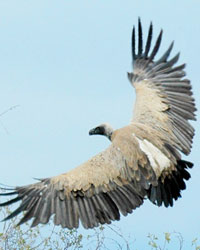 |
| Asian White Backed Vulture |
Gyps vultures are obligate scavengers and perform and important ecological function by stripping the soft tissue from carcasses. Gyps vultures used to be widespread and abundant, accounting for the majority of vulture sightings in Asia. Their abundance in India and Nepal, where Hindu religious taboos restrict the consumption of meat, is explained by the role Gyps has in consuming cattle carcasses.
All Gyps species are wide ranging in their foraging behaviour and juveniles disperse more widely than adults. Satellite tracking of Eurasian and Himalayan griffon vultures from Northern India reveals they spend their summers in Mongolia, returning to India for winter. A serious cross country flight!

